
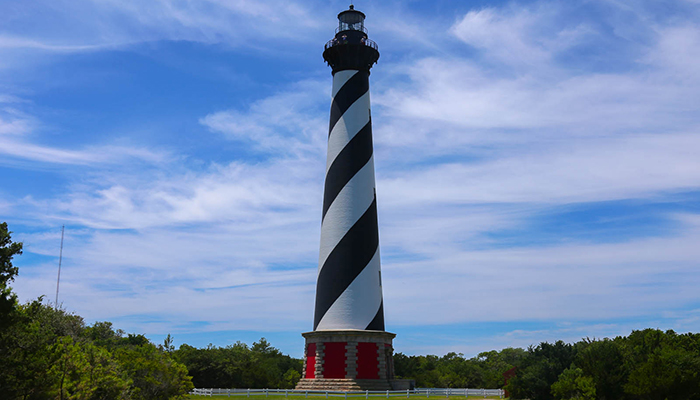
Easily recognized by its bold black-and-white spiral stripes, the Cape Hatteras Lighthouse is the tallest brick lighthouse in North America, standing 208 feet tall. Its rotating beacon flashes white every 7.5 seconds and is visible up to 20 miles out to sea.
The lighthouse has guarded one of the most dangerous stretches of the North Carolina coast for over 150 years. Just offshore lie the Diamond Shoals — shifting sandbars that have wrecked countless ships and earned these waters the name "Graveyard of the Atlantic."
Today, the lighthouse anchors the Cape Hatteras National Seashore. Climb the 257 steps to the balcony, and you'll be rewarded with 360-degree views of Hatteras Island, the Pamlico Sound, and the Atlantic Ocean.
.
History
The shoals off Cape Hatteras were so treacherous that Congress authorized a lighthouse here in 1794. The first structure — 90 feet of sandstone, lit by whale oil — became operational in 1803.
It was never bright enough. The Lighthouse Board added 60 feet and a first-order Fresnel lens, but the deteriorating tower needed constant repair. Congress funded a replacement, and the current brick lighthouse first shined on December 1, 1870. The original was demolished a year later.
The famous diagonal stripes were painted in 1873, helping mariners distinguish it from the Bodie Island Lighthouse to the north. The light was electrified in 1934.
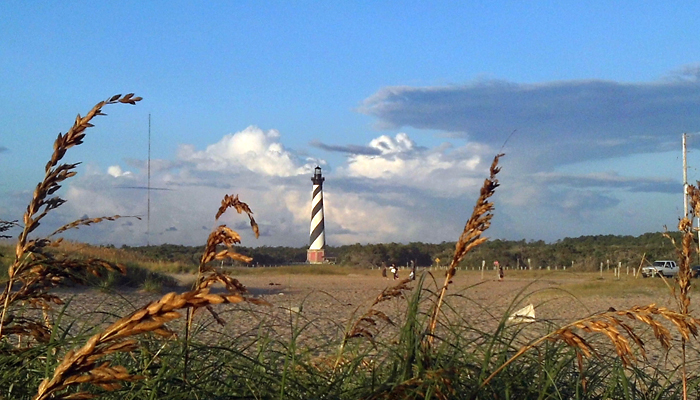
Erosion was the lighthouse's constant enemy. Originally built about 1,500 feet from the shoreline, by 1980 the ocean had crept to within 50–70 feet of its base. To save it, the entire 4,300-ton structure was moved 2,900 feet inland in 1999 — a 23-day engineering feat that cost roughly $11.8 million. At its new home, it once again sits about 1,500 feet from the water, with the original site marked by stones so visitors can see how close the sea once came.
The double keepers' quarters and the historic visitor center were relocated alongside the tower and remain open on site today.
.

Visit
The Cape Hatteras Light Station is open seasonally for climbing, typically spring through fall. Tickets are sold on-site, with discounted rates for senior citizens 62 and older, children, and visitors with disabilities. Be sure to check the National Park Service website for current dates, pricing, hours, and weight/height restrictions before you go.
Seasonal nighttime "Full Moon Tours" offer a rare chance to climb after dark — these sell out fast, so plan ahead.
The lighthouse sits within the Cape Hatteras National Seashore, so make a day of it: pair your climb with the beaches, the visitor center museum, and the keepers' quarters.


