
Quick Answer
Jellyfish season on the Outer Banks typically runs from spring through late summer, with sightings most common during the warmer summer months. Several species can be found along the OBX, including cannonball, moon, lion’s mane, mushroom, and sea nettles. Most stings are mild, but it’s best to avoid swimming near jellyfish blooms and touching jellyfish in the water or on shore. Seek medical help if a sting causes severe symptoms.
North Carolina Jellyfish
We’ve all seen jellyfish in the movies: those cute, floating blobs of color and light that make you just want to poke them? They look bouncy and fun and totally worth playing with, right?
Wrong.
While jellyfish are really beautiful, it’s better to go visit them at the “Delicate Drifters” exhibit at the North Carolina Aquarium on Roanoke Island than it is to play with them on the beach. Most of the jellyfish that call the waters of the Outer Banks home are generally harmless but a sting from one of their tentacles can still cause you some pain and discomfort. They can even still sting you even when they are out of the water. But don’t let a jellyfish sting deter you from enjoying the wonders of the beaches of the Outer Banks! Even if you do get stung, it’s not going to ruin your vacation, but it’s probably better to leave them alone when you do see them.
When is Jellyfish Season?
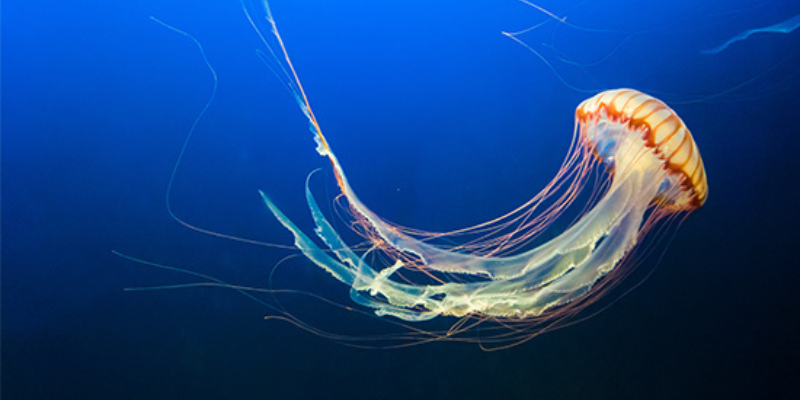
Jellyfish can be seen year-round in the warm waters off the coast of North Carolina, but the spring is normally the time that jellyfish will begin migrating in large groups called blooms. After moving around together in groups upward of 100,000 jellyfish, they reproduce during the summer, which is when you'll see them closer to shore. While you might encounter them anywhere from May through September, the peak jellyfish season on the Outer Banks typically runs from mid-July to late August.
Jellyfish also tend to wash up on the beach after large storms or periods when strong winds are pushing towards the shore. With more people on the beach during the summer months, it makes sense that this will be the period when more sightings are reported and stings received. That being said, this shouldn't stop you from enjoying the beauty of the ocean during the summer months! Just avoid swimming near large blooms, or groups of jellyfish, and be sure to avoid any jellies that have washed up on the beach, even if they appear harmless.
Common Types of Jellyfish on the Outer Banks & North Carolina Coast
The Outer Banks is home to many different types of marine wildlife and many different types of jellyfish, but jellyfish are found all over the world, in both the deep ocean and in shallow waters close to the surface. They are believed to have existed for millions of years and predate even the dinosaurs, let alone us humans enjoying our vacations here on the Outer Banks!
Jellyfish are not actually considered fish as they don’t have a backbone and are considered “invertebrates.” They move through the water by squirting water from their mouths which are inside their bell-shaped bodies. They use their tentacles to sting their prey and while they don’t purposefully attack humans, sometimes accidents happen. You can find out more about North Carolina jellyfish from National Geographic and continue reading to learn more about the types of OBX jellyfish and what to do if you are accidentally stung by one.
Cannonball Jellyfish
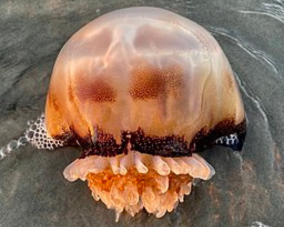
These jellyfish are the most common type of jellyfish on the Southeast Coast of the U.S. They are most abundant during the summer and the fall. These jellyfish have a round, cannonball-like dome that is often brown with a tiny cluster of arms underneath. Cannonballs, as they are sometimes referred to, are actually a diet staple of the leatherback sea turtle and are also sometimes sold for human consumption! They are mostly harmless with a sting that may itch slightly.
Lion’s Mane Jelly

These jellyfish are one of the largest species of known jellyfish in the world. Their tentacles can sometimes grow to be over 100 feet long, though you won’t have to worry about finding those in Kitty Hawk, as these larger jellies are found in the Arctic. These jellyfish are often brown or red with a thick “mane” of hairlike tentacles. These jellyfish are more often found in the open ocean, but if you do end up with a sting from one of these, it may hurt, so contact a doctor if the swelling or pain becomes intense.
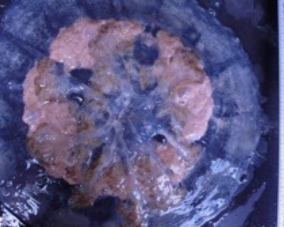
Mushroom Jellyfish
These jellyfish are very similar to Cannonball jellyfish in both shape and stinging ability. They are larger than Cannonballs, in that they can grow up to 20 inches across, and are often brown, white, or light yellow. Mushroom Jellyfish have tiny arms around their mouth and stinging cells within the bell, meaning that they can sting you, but it should be mild.
Southern Moon Jelly
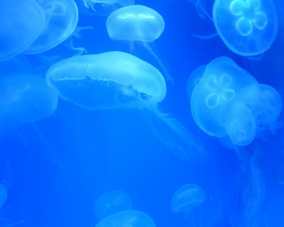
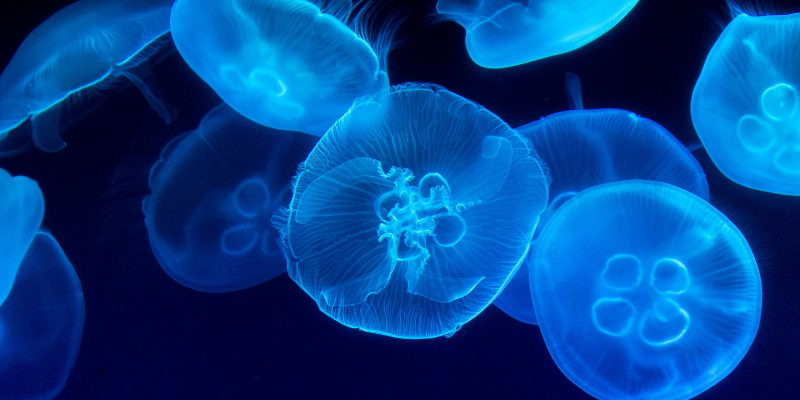
These are possibly the most well-known jellyfish in our area and you can find them at the “Delicate Drifters” exhibit at the NC Aquarium on Roanoke Island, but you more than likely won’t find them while swimming on your vacation. Their bells are round like dinner plates and theyusually have the four pink “horseshoes” visible in the middle. If you do see one of these, the sting may result in mild burning at the area of the sting.
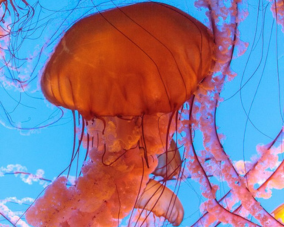
Sea Nettle
Of the jellyfish that you are likely to see on the Outer Banks, Sea Nettles are the ones to be most aware of. These brown or red circular jellyfish are common in the summer and have long tentacles with frilly mouth-arms that can give a painful sting. If you or someone else sees a sea nettle in the water, it’s probably a good idea to hang out on the beach and/or exercise caution.
Dangerous Jellyfish to Avoid in North Carolina
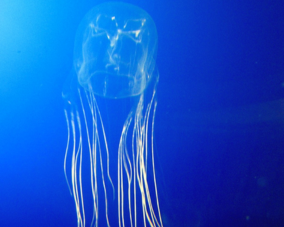
Sea Wasp Jellyfish
Sea Wasps are also known as Box Jellyfish because their bell is shaped like a box. These jellyfish are not super common to our area, but in the event that you do see one, it’s best to keep your distance. They tend to have several long tentacles that reach out from the four corners of their cube. Stings from Sea Wasps sometimes result in hospitalization but aren’t a common occurrence on the Outer Banks.
Portuguese Man-of-War
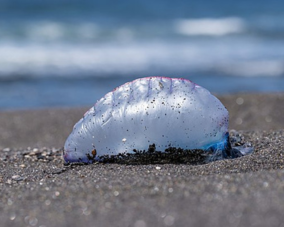
The Portuguese Man-of-War is the jellyfish-like creature (they’re not even actually jellyfish, but are a close relative) that is responsible for the bad reputation that jellyfish sometimes get. These jellies that typically inhabit the tropics can be very large, with tentacles that can extend up to 60 feet. A sting from a Man-of-War is often described as “shock-like” and can result in extreme pain and side effets like chills, fever, and nausea that require hospitalization. These jellies rarely make their way to the Outer Banks, but it’s better to be able to identify them, just in case.
How to Avoid Jellyfish Stings
Keep your beach days fun and safe by taking a few simple precautions to avoid jellyfish stings during your Outer Banks vacation:
Check the flags: Look at the lifeguard stand for a purple flag before entering the water. This indicates dangerous marine life is present.
Avoid visible blooms: If you see groups of jellyfish floating in the water or washed up along the tide line, stay on the sand.
Wear protective clothing: Consider wearing a long-sleeved rash guard or a lightweight wetsuit if you plan to surf or swim for an extended period. This provides a physical barrier against tentacles.
Skip the night swim: Jellyfish are nearly impossible to see in the dark, and some species move closer to shore at night.
Do not touch washed-up jellyfish: Tentacles can still sting long after the jellyfish has washed ashore. Keep a safe distance and make sure children and pets do the same.
Local Beach Warnings Flags for Jellyfish
When visiting the beaches of the Outer Banks, keep an eye out for purple flags flying at the lifeguard stands. A purple flag indicates that dangerous marine life, such as large jellyfish blooms, has been spotted in the water.
Towns that utilize this warning system include:
Corolla
Duck
Kitty Hawk
Kill Devil Hills
Nags Head
Hatteras Island
Always check with the on-duty lifeguard if you have questions about the current water conditions or recent jellyfish sightings before swimming.
How to Treat a Jellyfish Sting
Getting stung by a jellyfish while you’re on vacation can be a scary experience. Thankfully, most of the time, getting stung isn’t an emergency. Here are some “Do’s” and “Don’ts” after getting stung that may help you move on from this unfortunate experience so that you can get back to enjoying your vacation!
DO:
Rinse the sting with vinegar.
Use tweezers to remove any tentacles remaining on the skin.
Take a hot (NOT SCALDING) shower/bath to lessen pain.
Check with a healthcare professional for further instructions
DON’T:
Do NOT rinse with fresh water.
Do NOT scrape off any stingers that may be left on the skin.
Do NOT rub the area.
Do NOT put urine on the wound - this WILL make it worse.
When in doubt, contact a healthcare professional. Call an ambulance IMMEDIATELY if someone has been stung and they begin exhibiting any of the following symptoms:
Has trouble breathing or swallowing
Has a swollen tongue, lips, face, cheeks, etc.
Is nauseous, dizzy, or has muscle spasms
Has been stung multiple times and/or stung over a large part of the body
Has been stung by a dangerous jellyfish, like a Portuguese Man-of-War
You can always pack vinegar in your summer first aid kit to stay extra prepared. If you need additional help packing your first aid kit for your summer beach vacation, check out our Tips for Having a Safe Summer and our suggestions for Beach and Ocean Safety.
FAQs About Outer Banks Jellyfish
Are there any poisonous jellyfish in North Carolina?
While most jellyfish on the Outer Banks only cause mild irritation, highly venomous species like the Portuguese Man-of-War do occasionally, though rarely, visit our waters. If you happen to spot one of these, keep your distance and alert a lifeguard immediately.
Is it safe to swim on the Outer Banks, NC?
Yes, swimming in the ocean on the Outer Banks is incredibly safe and a highlight of any vacation! Just pay attention to the lifeguard warning flags and be aware of your surroundings to ensure your family has a wonderful beach day.
Are the clear “discs” washed up on the beach dangerous?
Those clear blobs without tentacles are usually the harmless remains of Moon Jellyfish or simple organisms called salps that cannot sting you. However, it is always the safest bet to look but not touch any marine life you find resting on the shore.
What is a jellyfish bloom?
A jellyfish bloom is a large group of jellyfish gathered in the same area. On the Outer Banks, blooms may begin appearing in spring as jellyfish migrate, and some groups can contain thousands of jellyfish. If you spot a large concentration in the water, it’s best to avoid swimming nearby.
Can dead jellyfish still sting you?
Yes. Jellyfish can still sting after they’ve died or washed up on the beach because their tentacles may continue to release venom. It’s best to admire any jellyfish you find from a distance and avoid touching them, even if they look harmless.
Book Your Outer Banks Vacation Today!
Now that you know what jellyfish to look out for in the NC Coast, why not head to the beach now and get the chance to see the amazing wildlife of the Outer Banks for yourself? Check out our available rentals and book your exciting Outer Banks vacation today!
Book your stay today in one of our cozy vacation rentals and explore all the best and brightest that the Outer Banks has to offer. Give our wonderful Guest Services Team a call today at (866) 884-0267 or take a look at our available rentals to get started planning your next unforgettable adventure to the Outer Banks. There so much to do and see. With amazing food and drinks, exciting excursions, and plenty of sand for everyone to relax, there's something for everyone here on the Outer Banks.
And don't forget about our layaway plan, which makes booking your dream vacation easier than ever. So don't wait. We're booking Outer Banks vacation rentals year round and we're excited to help you create memories to last a lifetime. We're here to help make your OBX vacation fun, exciting, and hassle-free. Give us a call today! Be sure to provide accurate information and make any necessary payments.
FIND THE PERFECT OUTER BANKS VACATION HOME:
- Pet-Friendly Rentals
- Oceanfront Rentals
- Rentals with a Private Pool
- New to Seaside
- Group Travel and Event Homes
- Partial Week Rentals
- Condos
Browse Outer Banks Rentals by City:
Browse by Rental Size:
Explore our website and give us a call to help kick-start your unforgettable Outer Banks vacation today. Be sure to follow us on BlueSky, Tumblr, Reddit, Facebook, Instagram, YouTube, Pinterest, and TikTok to stay up to date on all of our specials, new & featured homes, and tips & tricks for making the most of your next Outer Banks vacation.
We’ll see you at the beach.


About the Author: Lauren is an Outer Banks local, mom, history professor, and travel enthusiast. When she isn’t writing for the Seaside Vacations Travel Blog, Lauren can usually be found with her nose in a book or cuddling with her cats.
*Images courtesy of their respective owners as licensed under the Creative Commons Attribution-Share Alike 4.0 International license via Wikimedia Commons.


